
Analog or digital sensor? That’s the question!
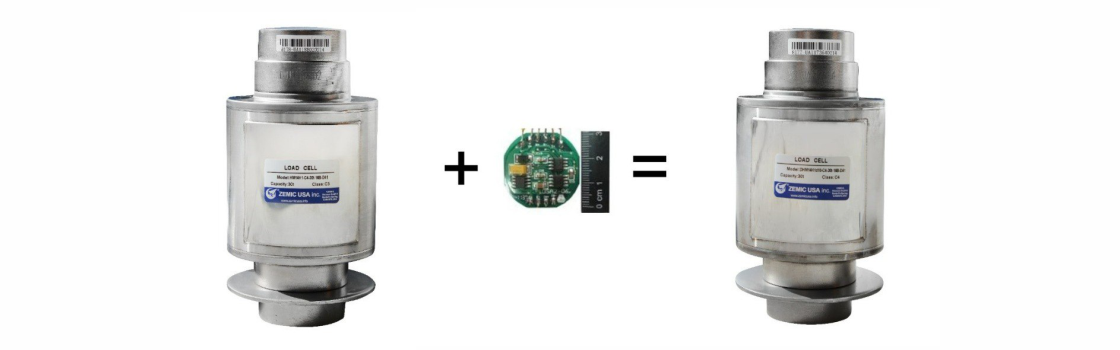
When selecting equipment for a weighing system, in addition to the basic parameters of the components there are often doubts, based on analog or digital sensors to implement it. The reasons for these doubts vary: someone is designing the scales with subsequent integration into the ACS, the other seeks maximum measurement accuracy, for some customers the scales will be located relatively far away from the location of the devices, and some simply consider digital sensors a more advanced solution for weighing. To clarify the issues of choice and help decide on the implementation of a particular task, let’s take a closer look at what analog and digital sensors are, what their similarities and differences are.
The main difference between a digital sensor and an analog sensor is in the way the load signal is transmitted to the elastic element: the analog sensor receives a continuous analog signal, while the digital sensor receives a discrete signal in the form of a digital code. Structurally, the digital sensor is a suitable analog sensor with an additionally integrated analog-to-digital converter (ADC). For example, the digital DHM14H1 is an analog NM14H1 with an AD-01 type single-channel ADC installed in the sensor housing.
Specifics of using a particular sensor, manufacturers’ recommendations for use and preferences of designers and installers of weighing systems are connected exactly with the type of signal.
The main criteria in selecting sensors most often are:
1. ACCURACY.
As noted above, the digital sensor is a refined analog version. Therefore, to say that the accuracy of a digital sensor is higher than the accuracy of the corresponding metrological indicators of the analog sensor would be incorrect. Errors and errors of C3, C4 or C5 sensors of OIML accuracy class will be within acceptable standards and will not depend on the type of output signal.
At the same time, if we talk about the weighing system as a whole, it can be noted that the accuracy of analog signal transmission over long distances or in difficult operating conditions is worse than that of the digital signal, which is due to the peculiarities of the transmission of different signals.
Analog signal is more vulnerable to various interferences and distortions. Temperature errors, electromagnetic noise, interference, electrostatic guidance, etc. arising during the transmission of the analog signal from the sensor to the device can significantly distort the reliability of the weighing results. Options to reduce these interferences are the use of special shielded strain-gauge cable in the design of sensors and implementation of weighing systems, six-wire connection schemes, the correct choice of installation location of scales.
Digital signal is more noise-resistant: possible interferences and noise affect the stability of information transfer, but do not distort the value of the digital code itself. Thanks to the noise immunity in a digital weighing system can be achieved higher accuracy than in the analog, and implement the transfer signal for long distances (analog – up to 200 m, digital – up to 1200 m).
2. COST
The cost of digital load cells more expensive than analog, which is logical: adding to one device additional, the cost of a new device can not be equal to or less than the original. In this case, comparing analog and digital sensors of the same manufacturer can be noted that the increase in cost is not so significant that the choice of equipment carried out only by economic considerations, the payment of potential benefits and advantages.
3. SERVICE
3.1 Remote diagnostics of the system
The weight system implemented on analog sensors, because of its structure does not allow to read the signal from the skin weight sensor. The analog signal is summed in the connection box, after its averaged value goes to the weight indicator, which displays the weight reading. Detecting a problem with any of the sensors when a problem occurs throughout the system is a time-consuming, resource-intensive process.
In a digital weighing system, the signals from each sensor gradually go to an indicator or directly to a computer with a weight display program installed. If there is a failure or problem in the system, identifying the problematic sensor is quick and relatively easy. Many manufacturers of weighing systems perform remote diagnostics of the equipment and already have an idea of the causes of the malfunction and options for fixing it before the employees go to the site.
This property of digital sensors is considered an advantage both for scale manufacturers (quick diagnostics, possibility of monitoring skin sensors, determining load in sensor installation locations and weight distribution uniformity, etc.) and for their users (quick restoration of scale operability, which is especially important at intensive weighing in productions, ports, elevators, etc.)
3.2 Easy sensor replacement
Physically, a faulty sensor is replaced in the same way regardless of the type of output signal. Further adjustment of the analog system is made by adjusting resistors in the connection box, calibration of weights and verification in metrology authorities.
Digital load cells do not require calibration when replaced in the scales. When they are replaced, it is enough to make a special calibration factor in the scale display or software and the scales will be restored.
But in this case the scales, in which the sensor was replaced, by default, lose their certificate of verification and can not be used for commercial activities. Therefore, even when the digital sensor is replaced, further changes in the passport and verification of the scales are required.
3.3 Interchangeability
Digital sensors from different manufacturers are not practically interchangeable! ADC sensors with a digital signal support the exchange protocol developed by the respective manufacturer and can only be used with the respective digital weighing indicator. For exceptions and options for replacement of digital sensors of one manufacturer with digital sensors of ZEMIC, please check with the managers of the company.
Analogue sensors according to interchangeability are more universal. The correspondence of the overall dimensions and electrical parameters makes it possible to install analogue sensors of different manufacturers in the system and connect various functional weight indicators to them.
4. RELIABILITY
Despite the true statement that an additional electronic element in the form of an ADC can theoretically reduce the reliability of digital load cells, in practice the reliability of sensors depends more on their correct installation and operation. Failure of the elastic element due to improper installation, overloading, dynamic shocks, minimal factory defects in the form of strain gauge detachment, etc. is much more common. Therefore, based on the experience of sales and feedback from consumers, we can confidently state that the reliability of analog and digital sensors is approximately the same.
TOTAL
Having considered the basic criteria for evaluation of sensors with different output signals the following conclusions can be made:
Advantages of analog sensors:
– Relatively low cost;
– Interchangeability of sensors from different manufacturers.
Advantages of digital sensors:
– High immunity to interference, up to 1000m.
– Distance from scales to the device, up to 1000m.
– Ability to see the weight from each sensor.
– Ability to train staff to calibrate and adjust scales.
– Protection against tampering devices being inserted into the circuit by intruders
– Ease of installation and maintenance of scales.
Which sensor is better analog or digital? You can answer this question only by understanding the functionality, tasks, requirements and peculiarities of the future weight measuring system.